
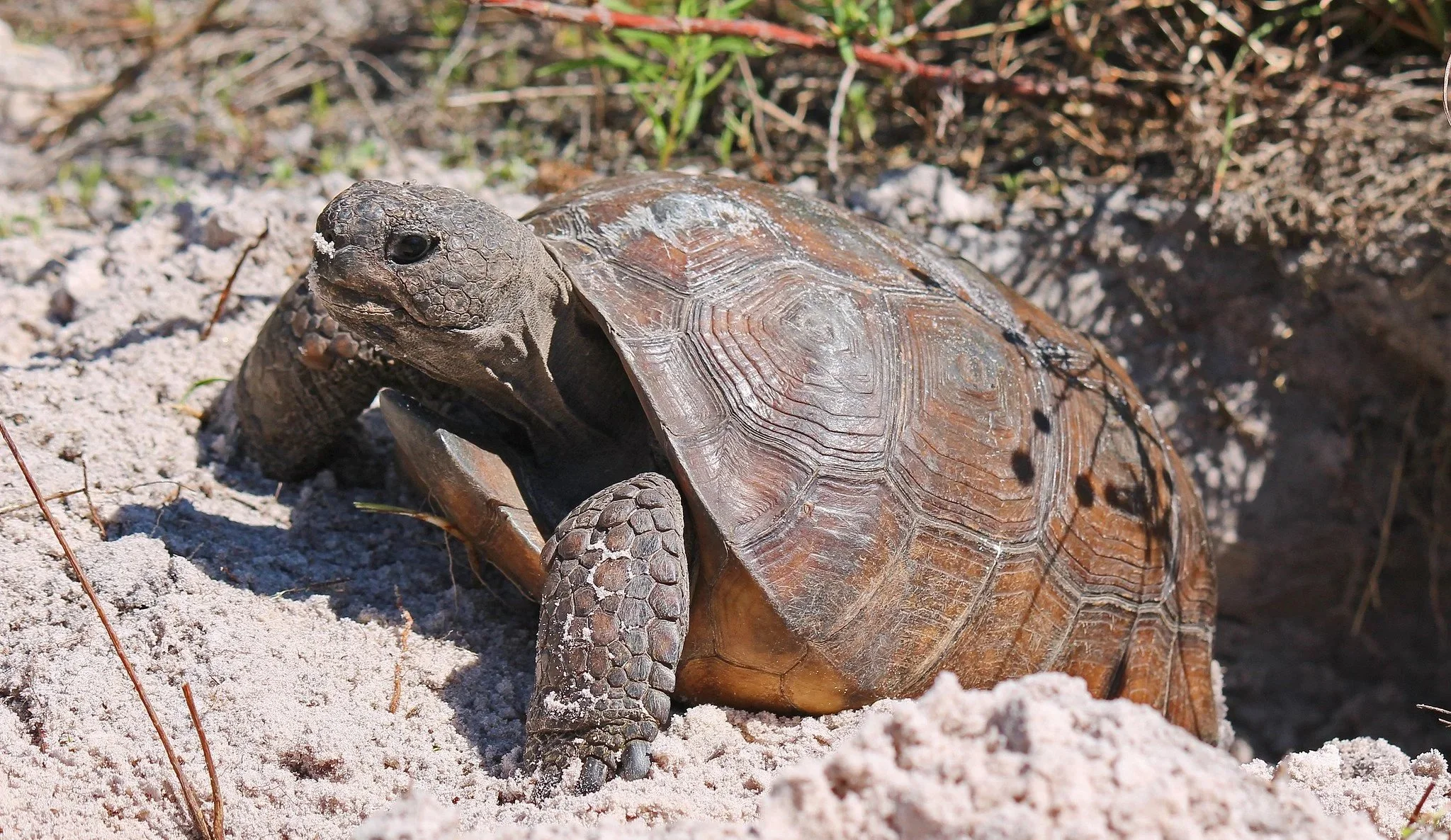
A gopher tortoise emerges from its burrow (Photo via Florida Fish and Wildlife Conservation Commission.)
Gopher Tortoise Expertise
Central Florida
If you're buying, selling, or developing land in Central Florida, gopher tortoise regulations can stop your project, delay closing, or trigger fines if handled incorrectly.
We handle that for you from start to finish.
Based in Ocala, we provide surveys, permitting, relocation, and compliance documentation so you can move forward without delays or surprises.
As a wildlife scientist and certified gopher tortoise agent, I can legally sign off on projects which means you don’t need to coordinate multiple consultants or risk something being done wrong.
We work with:
Realtors
Developers
Landowners
Contractors
Engineers
Our role is simple: keep your deal or project moving while staying fully compliant.
-
Gopher tortoise costs are generally $2,000 - $8,000 per tortoise; which includes agent fees, FWC fees, and recipient site costs. Recipient sites are currently charging ~$6,000/tortoise they accept.
-
You can move a tortoise out of the road, in the direction it is already going. But to relocate a tortoise, a permit is needed. Homeowners can get permits to move tortoises to another part of their own property (with the correct permit and training).
-
We recommend getting a survey before you buy land as part of your due diligence. We offer these inspections at a reduced rate.
-
If you find a gopher tortoise on your property, leave it and its burrow alone. If you are planning on building, call an agent.
Activities that do not require a permit are careful mowing, tilling, burning, and silviculture that avoids the entrance to the burrow, collapsing a burrow is illegal.
-
A gopher tortoise agent can scope burrows for you (assuming they are permitted to scope burrows).
Activity of a burrow can only really be confirmed by seeing the tortoise. A truly abandoned burrow will show signs of collapse. Gopher tortoises like to keep their burrow entrances tidy and clear of debris. However a messy burrow could just indicate that the tortoise has been dormant for a few days sleeping.
-
You can build on land with gopher tortoises as long as all activity, staging, and activity remains <25’ from the burrow entrance. If this cannot be achieved, we need to discuss options for on-site or off-site relocation
-
30 - 90 days, depending on how quickly FWC is moving
-
Systematically surveying the property for adult and juvenile burrows.
-
No, gopher tortoises and their burrows are legally protected
-
A disturbed site usually carries an extra fine of >$5,000 per tortoise burrow
-
Yes, they are Federal Listed as Regionally Threatened. In FL they are listed as State-designated Threatened. The International Union for Conservation of Nature (the governing body of protected sites and species) have listed gopher tortoises as Critically Endangered. The IUCN runs the red list of threatened species.
-
In places where they are federally protected, taking tortoises out of the wild, moving them, harming them, or otherwise disturbing then can be subjected to legal proceedings under the Endangered Species Act (fines up to $50,000 and/or imprisonment up to 1 year)
In Florida, unintentional offences can be as low as several hundred dollars and are considered a civil matter. If the offender should have known better, ie developers, fines and possible imprisonment can occur. If commercial harm is done (developing or disturbing land prior to proper clearance or surveys) fines of $5,000 per tortoise are normal, and up to 5 years incarceration.
Note on Developer Liability: Entombing, collapsing, or burying tortoises/burrows during commercial or residential site clearing without a permit routinely elevates charges to Level Four 3rd-Degree Felonies.
-
Call FWC and report it. You can report any tortoise you see here (https://app.myfwc.com/HSC/GopherTortoise/) and if you need the FWC hotline it is listed here (888-404-FWCC (3922)) you can also submit a tip through their tip-line (https://app.myfwc.com/LE/WildlifeAlert/Default.aspx).
-
The state and federal agents. But many violations are reported by neighbors or community members who know there are tortoises there and see someone engaging in activities without a permit. Permits are publicly searchable.
-
Call the FWC hotline (888-404-FWCC (3922))
-
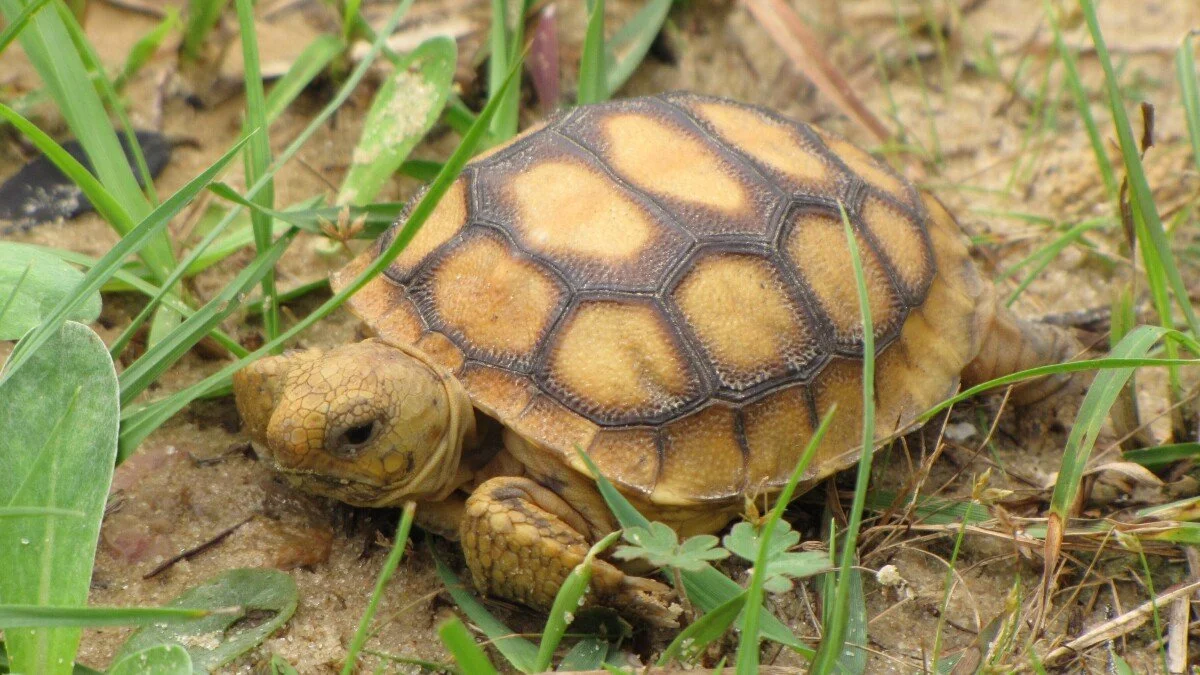
No, leave the baby tortoise alone. It knows where it is.
-
Report it to FWC and leave it alone. The tortoise should be able to dig its way out
Frequently Asked Questions
-
Generally yes. Unless you are moving the tortoise out of the road in the direction it is already going
-
Generally no, there are permit options if you are worried about your foundation or other structure
-
First get a survey to be sure there are no gopher tortoises on your property, then fence your property with a fence that is buried between 8” - 12” deep.
-
Yes, be sure to avoid the entrance of the burrow as collapsing a burrow is illegal
-
If you can, enjoy it. If you need to use the area, call us.
-
Call a permitted FWC Certified Gopher Tortoise Agent. Call us.
-
Gopher tortoise burrows require an avoidance zone of 25’. If you can manage to leave this much of the land as tortoise habitat, then there is no problem. If you need to build or develop the land, call an agent.
-
Yes, most buyers will use the cost of handling the tortoises as a bargaining tool to counter asking price.
-
We recommend due diligence as the cost of removing a tortoise can easily reach $7,000/tortoise.
-
You can build if the construction footprint (building area, staging area, etc) gives all burrows a 25’ buffer. Nothing can be built or staged within 25’ of a gopher tortoise burrow. We implement a silt fence around the construction/staging site to ensure no tortoises wander into harm's way.
-
Yes, finding a tortoise after construction starts is an automatic halt of at least 28 days and fines of ~$5,000 per tortoise on top of standard relocation costs. Depending what happens the state can implement jail time.
-
Any time heavy equipment, dirt work, or construction is planned within 25’ of a gopher tortoise burrow.
-
The project will be halted for at least 28 days and a fine of ~$5,000 per tortoise on top of standard relocation costs (which are around $7,000 per tortoise).
-
No. The land owner can mow (while avoiding burrows), hand trim trees, till without heavy equipment, or engage in other silviculture activities.
-
Mitigation contributions are the fees paid to FWC when the permit is submitted. They vary based on number of tortoises and classification of the site accepting the relocated tortoises.
-
Standard stocking rates are approved between 1 and 4 tortoises per acre depending on conservation status of the land. In nature, as many tortoises as can survive may be found on an acre. We have seen up to 15 tortoises living on one acre.
-
A recipient site is a property that has an FWC permit allowing the land owners to accept tortoises from other parcels/properties.
-
Projects take anywhere from 30 days - 90 days, heavily depending on how long it takes FWC to process the permit. The capture of tortoises can take 2 hrs - 14 days per tortoise depending on capture method.
-
On-site relocation is an option 10 burrows (or fewer) are within the construction site and there is appropriate space and habitat outside the construction site (but on the same property) for the tortoises to live.
Off-site relocation is when tortoises are moved from the property to a permitted recipient site somewhere else.
-
Gopher tortoise burrows have a half moon shape, with a flat floor and rounded roof of the burrow, the same shape as the tortoise. They are also characterized by an apron of sand that has been tossed from the burrow as the gopher tortoise was digging and clearing out their burrow. Gopher tortoises lay their eggs in this apron of sand at the entrance of their burrow. It is important to not step on the apron, especially during nesting season.
-
Gopher tortoises are a medium-sized land turtle. They have a domed top shell colored brown, tan, or gray, a yellowish bottom shell, stumpy elephant-like back feet, and flat, shovel-like front legs covered in scales for digging.
-
Adults grow 9 to 15 inches long and weigh up to 15 pounds.
-
Because their deep underground burrows provide a safe, stable microclimate of temperature and humidity, they provide shelters to more than 350 to 400 species of vertebrates and invertebrates.
-
Gopher tortoises are opportunistic herbivores, eating low-growing plants like wiregrass, broadleaf grasses, gopher apples, and legumes; whatever is in the dominant plants within their environment likely make up the bulk of their diet. Tortoises likely alter their diet seasonally depending on forage availability.
-
Gopher tortoises can live 40 to 60 years in the wild, though captive tortoises may live 90+ years. Males reach adulthood at approximately 9-12 years of age, whereas a female may take 10-21 years to reach maturity depending on local resource abundance and latitude
-
The breeding season is between March and October.
-
Females typically lay one clutch of 5-9 ping pong ball-sized eggs per year. Eggs are deposited between May and July frequently within the soft mound of sand at the entrance of their burrow (burrow apron). Eggs incubate 80 to 110 days, and hatchlings typically emerge between August and November. Tortoises exhibit no maternal care of their eggs or young.
-
They are ancient reptiles that play central roles in seed dispersal, turning over sand nutrients by digging up deep holes, their burrows provide shelter and protection from fire and the elements for not just themselves, but ~400 other species.
-
A keystone species, named after the keystone at the center of an arch that holds the arch up, is a species that holds an ecological community together; if removed, the system changes drastically or collapses entirely.
-
Gopher tortoise burrows have relatively stable thermal environments, protection from cold winters and hot summers. They also provide protection from fires, hurricanes, and other natural disasters.
-
They typically forage within 160 ft of their burrow but will travel farther if forage is unavailable. Rarely will they travel more than 1km from their burrows unless they need to in order to find suitable habitat.
-
Gopher tortoises prefer well-drained, sandy soils found in habitats such as longleaf pine sandhills, xeric oak hammocks, scrub, pine flatwoods, dry prairies, and coastal dunes. They are also found in a variety of disturbed habitats including pastures and urban areas. Sandy soils are necessary for digging burrows and nesting, abundant herbaceous plants for forage, and sunny areas with minimal tree shade is important for nesting and basking. Fires historically played an important role in many of the habitats where tortoises are found, as fire reduces canopy cover and promotes growth of herbaceous forage plants. When fire is suppressed from these environments, the habitat may become unsuitable for gopher tortoises.

Chelsea E Durr, PhD
As a Wildlife Scientist and FWC-certified Gopher Tortoise Agent, I bring over a decade of specialized experience in the conservation of endangered species across both terrestrial and marine ecosystems. My technical foundation is rooted in a Ph.D. from Purdue University, where my research focused on foraging ecology and spatial dynamics—expertise I continue to apply as a Postdoctoral Research Associate at Purdue and as a member of the Executive Team at The Leatherback Trust.
Now based in Ocala, Florida, where I also co-manage an elite equine operation, I possess a unique perspective that balances rigorous science with a deep respect for working lands. I provide my clients with practical, field-tested solutions to navigate gopher tortoise regulations and land-use challenges, ensuring that projects remain on track while upholding the highest standards of wildlife protection.
Google Scholar>> OrchidID>>